Raphael · c.1506
Saint George and the Dragon
Posters from $10.82 USD · Canvas from $28.14 USD
Ships anywhere in the USA
Saint George spearing a writhing green dragon as the princess flees — Raphael's small jewel-like panel. National Gallery of Art, Washington.
Up to 16 × 21 in · portrait
Size
Larger sizes are unavailable for this painting because the source scan's resolution wouldn't print at gallery quality.
Format & finish
Archival cotton canvas stretched over a wooden frame. Ready to hang as-is. No external frame.
Scale next to a 5'10" person
No sales tax added at checkout
Visa · Mastercard · Amex · Discover · Apple Pay · Google Pay
Materials & quality
›Canvas & inks
Giclée-printed on archival cotton canvas with fade-resistant pigment inks, hand-stretched over wooden bars. Gallery-wrapped — ready to hang with no extra frame needed.
›Floater frame
Hand-finished solid wood floater frame in five finishes. The canvas sits inside with a clean shadow gap — the way galleries hang contemporary canvas.
›Posters
Premium archival paper — 200 gsm soft matte or 230 gsm vibrant glossy. Ships flat or rolled, ready for your own frame.
›Faithful to the source
Printed from the highest-resolution museum and archive scans available. Each painting's maximum size is capped at what its source scan can support at gallery quality.
The story of Saint George and the Dragon
St. George and the Dragon is a small oil on wood cabinet painting by the Italian High Renaissance artist Raphael, painted c. 1505, and now in the National Gallery of Art in Washington, D.C. The saint wears the blue garter of the English Order of the Garter, reflecting the award of this decoration in 1504 to Raphael's patron Guidobaldo da Montefeltro, Duke of Urbino, by King Henry VII of England. The first word of the order's motto, "HONI" can be made out. The painting was presumably commissioned by the Duke, either to present to the English emissary who brought the regalia to Urbino, Sir Gilbert Talbot, or to Henry himself—recent scholarship suggests the latter. The honour paid to a minor Italian ruler reflected Henry's appreciation of the cultural prestige of Renaissance Italy as much as any diplomatic purpose.
Adapted from Wikipedia, available under CC BY-SA 4.0.
Raphael
Raffaello Sanzio da Urbino, now generally known in English as Raphael, was an Italian painter and architect of the High Renaissance. His work is admired for its clarity of form, ease of composition, and visual achievement of the Neoplatonic ideal of human grandeur. Together with Leonardo da Vinci and Michelangelo, he forms the traditional trinity of great masters of that period.
All Raphael prints →Biography adapted from Wikipedia, available under CC BY-SA 4.0.
You may also like
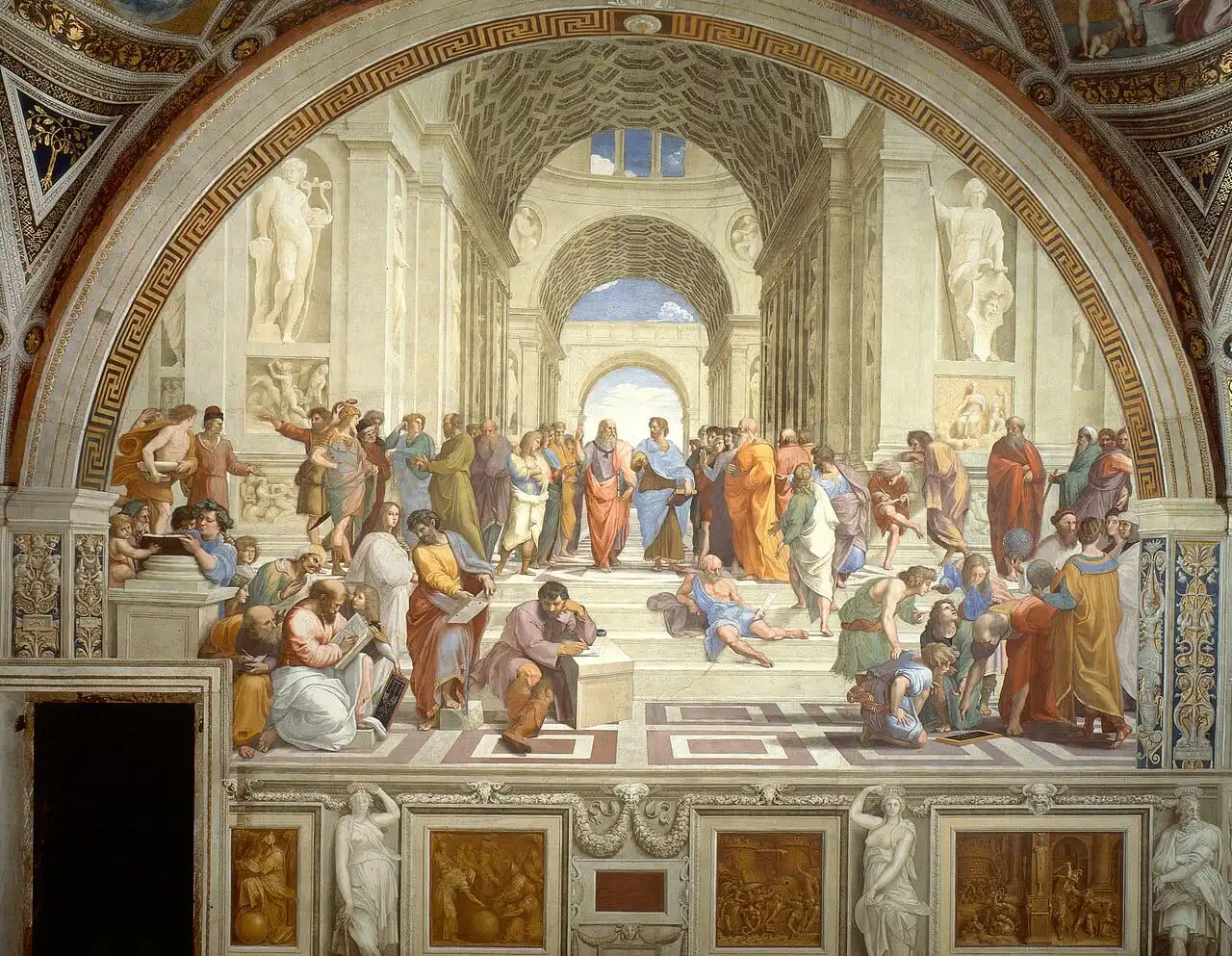
Raphael · 1509–11
The School of Athens
Mini · Petite · Small
From $10.82 USD
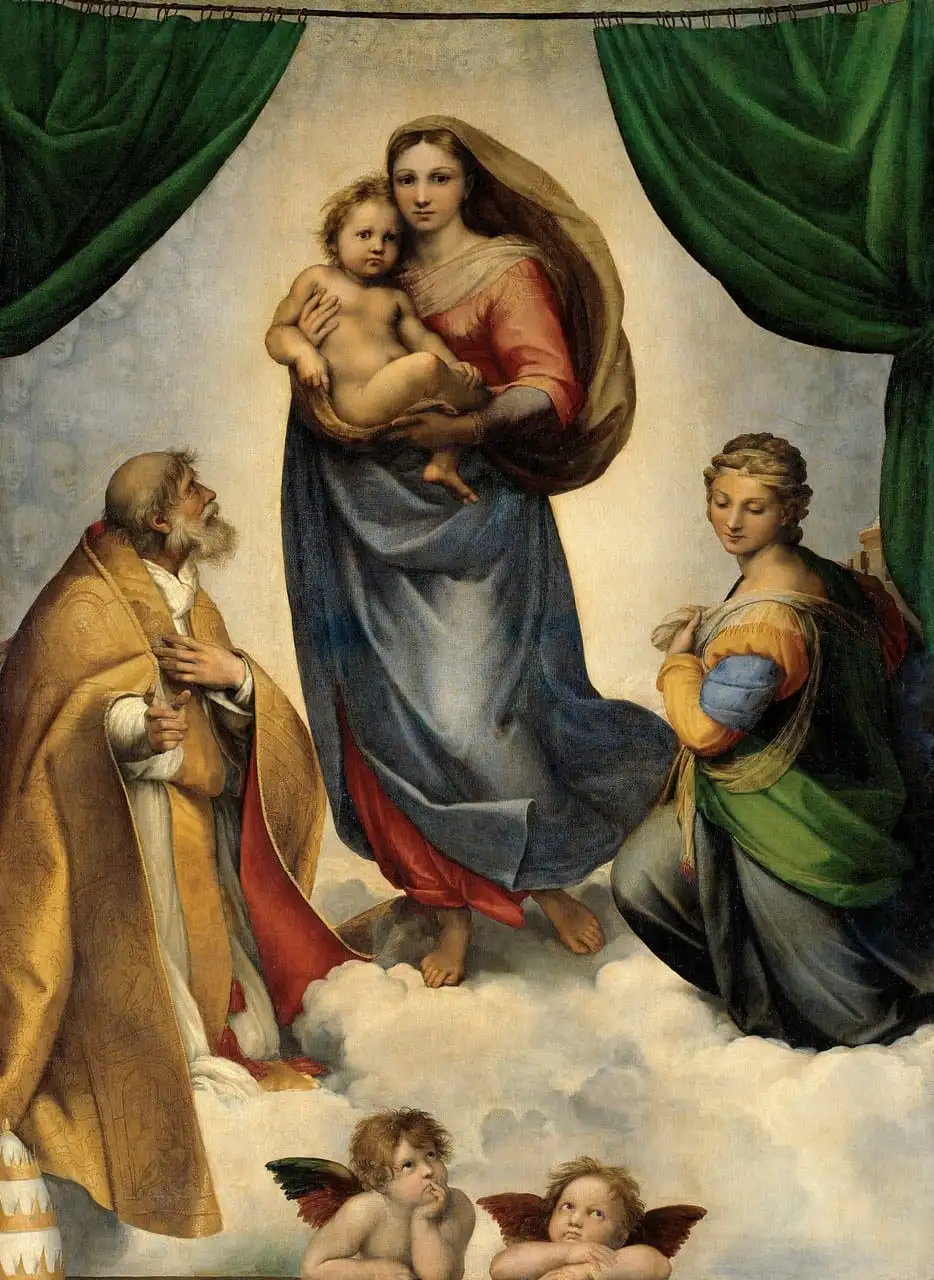
Raphael · 1512
The Sistine Madonna
Mini · Petite · Small
From $10.82 USD
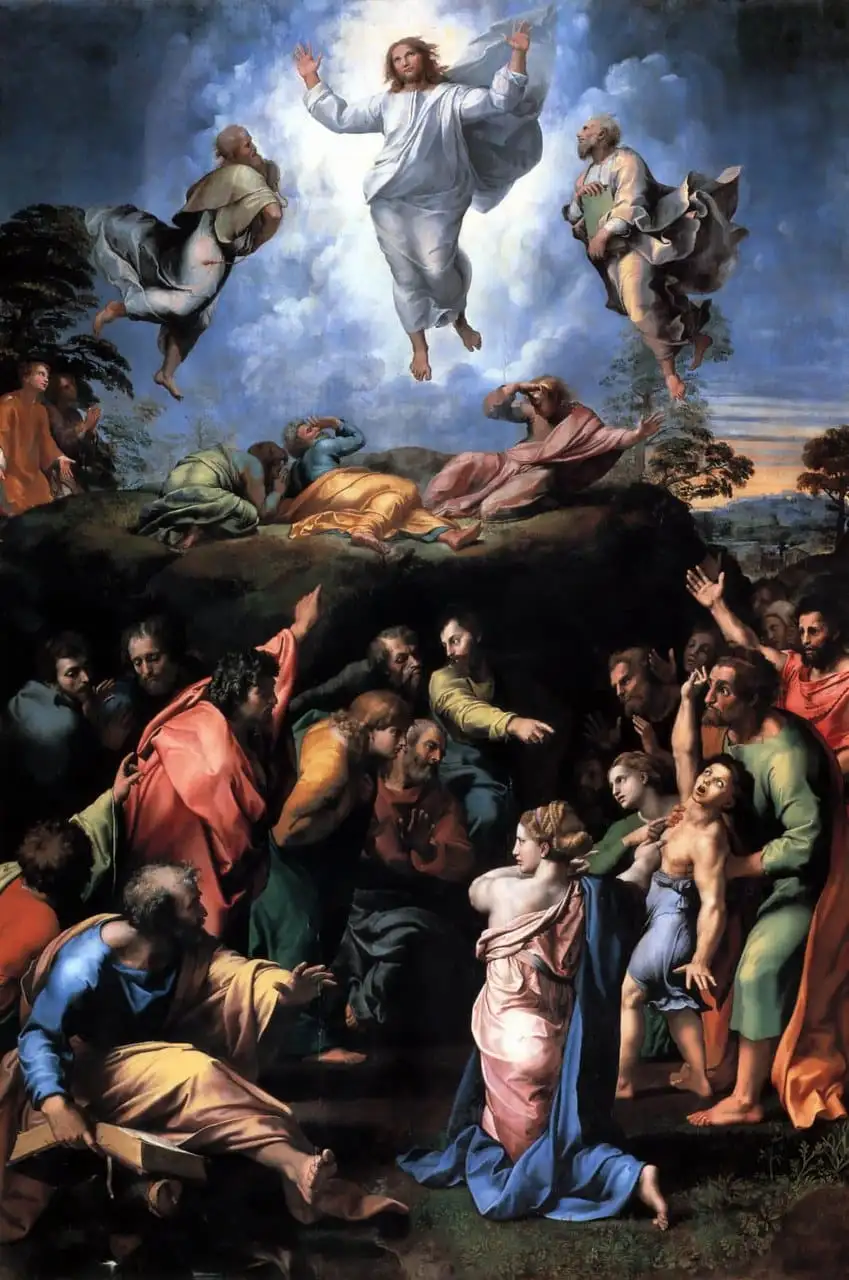
Raphael · 1516–20
The Transfiguration
Mini
From $10.82 USD
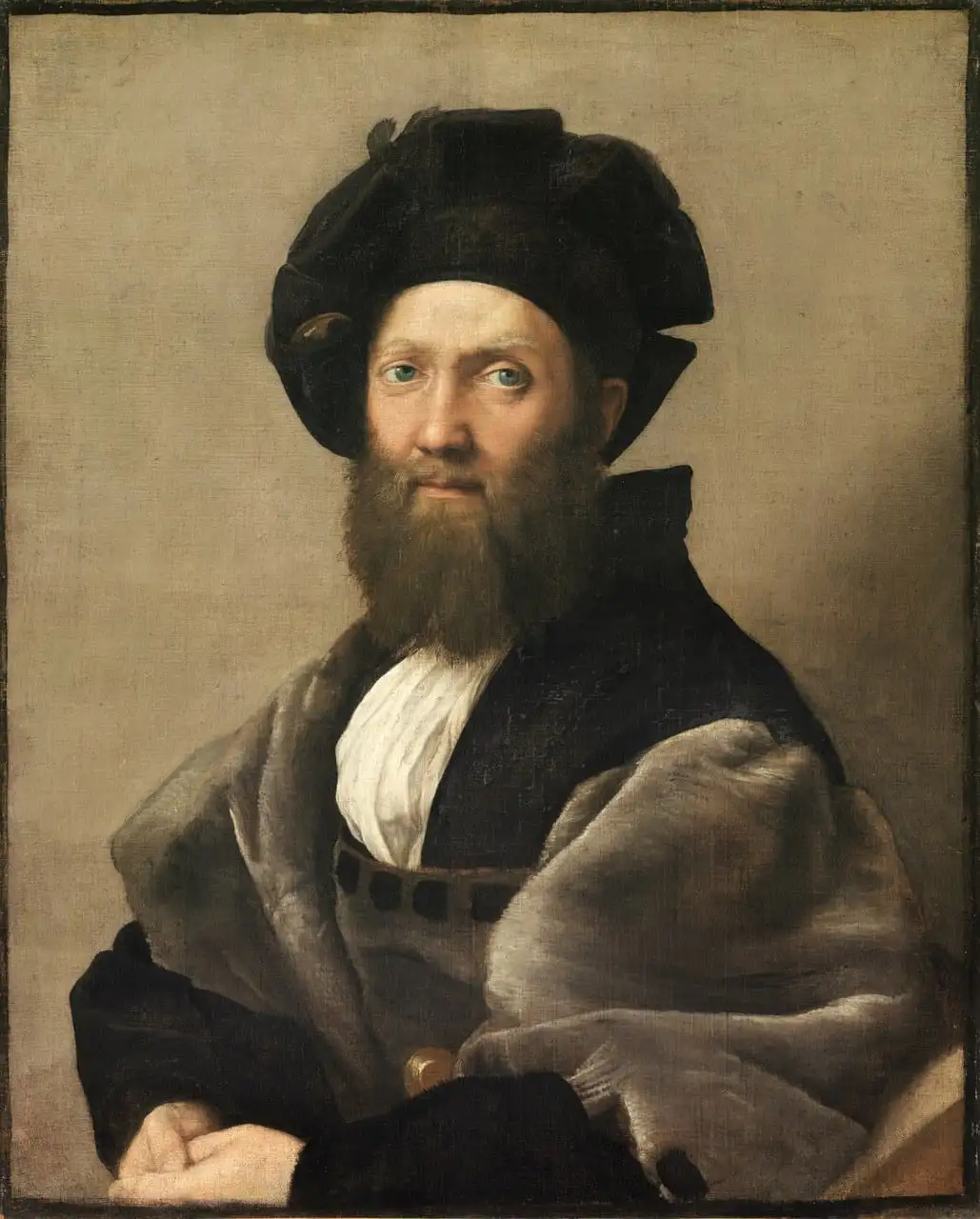
Raphael · c.1514–15
Portrait of Baldassare Castiglione
Mini · Petite · Small · Medium · Large · Extra Large
From $10.82 USD
Raphael · 1504
The Marriage of the Virgin
Mini
From $10.82 USD
Raphael · 1514
The Triumph of Galatea
Mini
From $10.82 USD